
Continuous Glucose Monitoring and Insulin Delivery: Could Better Diabetes Technology Improve Patient Care?
Could advances in continuous glucose monitoring and insulin delivery help healthcare professionals manage diabetes more effectively while improving patient experiences? As NHS services face increasing demands across diabetes, maternity, oncology, haematology and long-term condition management, access to reliable glucose monitoring and insulin administration devices remains an important part of modern healthcare.
For patients living with diabetes, maintaining appropriate glucose levels can involve frequent monitoring, medication adjustments and daily decisions about food, exercise and treatment. For healthcare professionals, understanding changes in glucose concentrations and ensuring insulin is administered safely are essential components of effective diabetes care.
Traditional finger-prick testing provides valuable glucose measurements, but individual readings cannot always reveal fluctuations occurring throughout the day and night. Continuous glucose monitoring (CGM) technology provides regular glucose information, helping patients and clinicians recognise patterns and make more informed decisions.
Alongside glucose monitoring, insulin delivery devices play a vital role for patients who require insulin therapy. From reusable insulin pens to disposable injection systems, selecting suitable equipment can support accurate medication administration, patient confidence and continuity of care.
At Niche Healthcare, we recognise the importance of providing healthcare professionals with access to medical products that support safe, effective and personalised treatment.
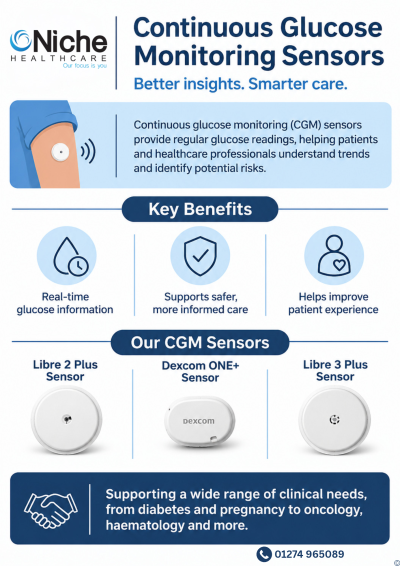
Our diabetes product range includes the Libre 2 Plus Sensor, Dexcom ONE+ Sensor, Libre 3 Plus Sensor, HumaPen Insulin Delivery Device and Disposable Injection Pen.
Together, these products offer healthcare organisations options for supporting glucose monitoring and prescribed injectable treatment across a range of clinical environments.
Understanding Continuous Glucose Monitoring and Insulin Delivery
Continuous glucose monitoring and insulin delivery serve two different but closely related purposes within diabetes management.
Continuous glucose monitoring sensors measure glucose concentrations in interstitial fluid, which surrounds cells beneath the skin. These wearable devices collect glucose information at regular intervals, allowing patients and healthcare professionals to observe trends rather than relying entirely on individual measurements.
This can be particularly useful for identifying periods of hyperglycaemia, hypoglycaemia and fluctuations associated with meals, medication, physical activity or illness.
Insulin delivery devices, meanwhile, are designed to administer prescribed insulin doses. They may be reusable devices that accept compatible insulin cartridges or disposable systems supplied for use according to their specific design.
For patients requiring insulin, access to both glucose information and an appropriate administration device can support more coordinated diabetes management.
However, continuous glucose monitoring sensors and manual insulin pens are separate technologies. A CGM sensor does not automatically control the dose delivered by a standard insulin pen, and patients must follow their prescribed treatment plan.
NICE recommends that adults with type 1 diabetes are offered an appropriate choice of continuous glucose monitoring technology based on their individual needs and preferences. It also provides guidance on insulin injection devices and safe insulin administration.
Further information is available at:
Overview | Type 1 diabetes in adults: diagnosis and management | Guidance | NICE
Exploring Continuous Glucose Monitoring Sensors Available from Niche Healthcare
Continuous glucose monitoring technology has become an established component of diabetes care, particularly for individuals requiring insulin therapy or experiencing difficulties maintaining stable glucose levels.
Niche Healthcare offers three CGM sensor options for healthcare professionals and procurement teams to consider.
Libre 2 Plus Sensor: Supporting Everyday Glucose Management
The Libre 2 Plus Sensor is designed to provide ongoing glucose information, helping eligible patients understand how glucose concentrations change throughout daily activities.
For individuals managing diabetes, recognising glucose trends can support discussions about treatment, nutrition, exercise and insulin requirements.
Access to glucose information can also help diabetes specialist nurses and clinicians review patterns that may not be apparent from occasional blood glucose measurements.
The sensor may be relevant to diabetes clinics, endocrinology departments, community healthcare services and pharmacy teams supporting patients with ongoing glucose monitoring requirements.
Healthcare professionals should confirm the manufacturer’s current age indications, system compatibility and intended use before selecting the product.
Explore the Libre 2 Plus Sensor:
Libre 2 Plus Sensor for Continuous Glucose Monitoring | Niche Healthcare
Dexcom ONE+ Sensor: Supporting Glucose Awareness and Clinical Reviews
The Dexcom ONE+ Sensor provides continuous glucose monitoring information to support eligible patients with diabetes.
By allowing users to observe glucose trends, the system can support greater awareness of changing glucose concentrations and help inform discussions with healthcare professionals.
This may be particularly valuable for patients who require regular glucose monitoring or experience fluctuations that affect their everyday activities.
For clinical teams, reviewing glucose data can provide additional context when assessing diabetes management and treatment effectiveness.
When considering the Dexcom ONE+ Sensor, healthcare organisations should assess patient eligibility, compatible devices, training requirements and the monitoring features available.
Explore the Dexcom ONE+ Sensor:
Dexcom One Plus Sensor for Continuous Glucose Monitoring | Niche Healthcare
Libre 3 Plus Sensor: Supporting Continuous Glucose Insights
The Libre 3 Plus Sensor is another continuous glucose monitoring option designed to provide glucose trend information through compatible monitoring technology.
For patients managing diabetes, access to regular glucose measurements can support self-management and help identify patterns requiring clinical attention.
Healthcare professionals may use CGM information during treatment reviews to assess glucose variability and discuss potential adjustments to a patient’s management plan.
The suitability of the Libre 3 Plus Sensor depends on individual clinical needs, approved indications and compatibility with the patient’s existing monitoring arrangements.
Explore the Libre 3 Plus Sensor:
Libre 3 Plus Sensor for Continuous Glucose Monitoring | Niche Healthcare
Although these three sensors have similar monitoring objectives, they are not necessarily interchangeable. Healthcare professionals should review each product’s specifications and intended use before making recommendations.
Insulin Delivery Devices: An Essential Part of Diabetes Management
While continuous glucose monitoring helps patients and clinicians understand glucose levels, insulin delivery devices support the administration of prescribed treatment.
For people with type 1 diabetes, insulin therapy is essential. Some individuals with type 2 diabetes, diabetes during pregnancy or other specific clinical conditions may also require insulin treatment.
Accurate administration is important because insulin dosing errors can result in potentially serious consequences, including hypoglycaemia or hyperglycaemia.
Insulin pens are widely used because they provide a practical method of administering prescribed insulin doses.
Depending on the device, patients may use a reusable insulin pen with replaceable cartridges or a disposable injection system.
Both approaches require appropriate training, compatible medication and safe injection practices.
HumaPen Insulin Delivery Device: Supporting Reliable Insulin Administration
The HumaPen Insulin Delivery Device is a reusable insulin pen designed to support prescribed insulin administration.
Unlike fully disposable insulin pens, reusable devices are intended for ongoing use with compatible replacement insulin cartridges.
This can provide a practical option for patients who require regular insulin injections and prefer a familiar device for long-term treatment.
The HumaPen may be relevant to diabetes clinics, GP surgeries, hospital wards, community nursing services, care homes and specialist outpatient departments.
For patients managing diabetes independently, a suitable insulin pen can support confidence with their prescribed injection routine.
Healthcare professionals must ensure that patients understand how to insert the correct insulin cartridge, select the prescribed dose, use a compatible sterile needle and dispose of used sharps safely.
Compatibility is particularly important. Insulin cartridges and pen needles must be appropriate for the exact device model, and insulin products should never be substituted without suitable clinical authorisation.
The reusable construction may also support healthcare organisations reviewing waste reduction and long-term procurement requirements, although overall cost-effectiveness depends on the specific device, cartridges and purchasing arrangements.
Explore the HumaPen Insulin Delivery Device:
HumaPen Insulin Delivery Device | Niche Healthcare
Disposable Injection Pens: Convenience in Prescribed Treatment Administration
Disposable injection pens provide another option for administering injectable medication, depending on the product’s intended use and compatibility.
In diabetes care, prefilled disposable insulin pens can offer a convenient alternative to reusable cartridge-based systems.
They may be particularly useful for patients who prefer a straightforward treatment routine or who find changing insulin cartridges difficult.
For healthcare professionals, disposable injection devices can support prescribed medication administration when the correct product, dose and technique are used.
They may be relevant to diabetes services, community healthcare, pharmacy departments and selected outpatient treatment pathways.
However, not every disposable injection pen is an insulin pen. Some injection devices are designed for other medicines, including certain treatments used in obesity management.
The precise medication compatibility and intended use of Niche Healthcare’s Disposable Injection Pen must therefore be confirmed before clinical use.
Disposable pens should also be assessed for their environmental impact, procurement cost, storage requirements and safe disposal arrangements.
Explore the Disposable Injection Pen:
Disposable Injection Pen
How Continuous Glucose Monitoring and Insulin Delivery Support Diabetes Services
Diabetes specialist services are among the primary healthcare settings where glucose monitoring and insulin administration technologies are used.
For individuals with type 1 diabetes, insulin treatment is essential, and regular glucose monitoring helps patients understand how their glucose levels respond to everyday activities and prescribed medication.
Continuous glucose monitoring sensors can provide information about glucose patterns throughout the day and night, while insulin delivery devices allow patients to administer prescribed doses.
For patients using multiple daily insulin injections, these technologies can complement one another within an individualised treatment plan.
Diabetes specialist nurses, endocrinologists and community diabetes teams can use glucose monitoring information to support treatment reviews, patient education and discussions about insulin requirements.
Patients with insulin-treated type 2 diabetes may also benefit from appropriate monitoring technology, particularly where there are concerns about hypoglycaemia or glucose variability.
However, the choice of monitoring system and insulin delivery device should always reflect the patient’s clinical circumstances, treatment regimen and personal preferences.
Pregnancy and Maternity Services: Supporting Glucose Management
Maintaining appropriate glucose levels during pregnancy is important for maternal and neonatal health, particularly for women living with pre-existing diabetes.
Pregnancy can influence insulin requirements, making regular monitoring and appropriate treatment adjustments essential.
NICE recommends offering real-time continuous glucose monitoring to pregnant women with type 1 diabetes. It also recommends considering CGM in certain circumstances for pregnant women receiving insulin treatment who do not have type 1 diabetes.
For maternity departments, glucose monitoring data can support discussions about insulin requirements, glucose fluctuations and treatment effectiveness.
Where insulin administration is required, suitable injection pens may support the prescribed treatment plan.
Maternity teams should ensure that the selected monitoring system and insulin delivery device are appropriate for pregnancy and compatible with the prescribed medication.
Further information is available through NICE:
Oncology and SACT: Managing Glucose During Cancer Treatment
Patients receiving systemic anti-cancer therapy (SACT) may experience changes in glucose regulation, particularly when treatment includes corticosteroids.
Steroid medications can increase blood glucose concentrations, potentially creating additional challenges for patients living with diabetes.
Changes in appetite, nutritional intake, infection risk and physical activity during cancer treatment may also influence glucose management.
For selected patients, continuous glucose monitoring may provide useful information about glucose fluctuations during treatment.
Patients who require insulin may also need an appropriate insulin delivery device, with doses determined by their treating clinical team.
For oncology and SACT professionals, access to glucose information may support collaboration with diabetes specialist services and help inform individualised care.
However, CGM should not be regarded as a routine requirement for every patient receiving cancer treatment. Its use should be based on established clinical indications and the suitability of the device.
Haematology: Supporting Patients with Complex Treatment Requirements
Haematology patients may have complex treatment needs involving corticosteroids, prolonged hospital admissions or other therapies that can affect glucose regulation.
For patients with existing diabetes, these circumstances may require additional glucose monitoring and adjustments to prescribed treatment.
Continuous glucose monitoring may be appropriate for selected patients, particularly those already using CGM as part of their diabetes management.
Where insulin treatment is prescribed, an appropriate insulin pen may support administration within established medicines management procedures.
Clinical teams should continue to use validated blood glucose testing whenever required by local protocols, particularly in acute or unstable clinical situations.
For haematology services, the emphasis should remain on individual assessment, multidisciplinary communication and safe medication administration.
Obesity and Metabolic Health: Understanding the Role of Glucose Monitoring
Obesity and type 2 diabetes are closely associated, and many patients attending specialist weight management services also require diabetes care.
For individuals receiving insulin or other glucose-lowering treatment, monitoring glucose concentrations can help healthcare professionals assess treatment effectiveness.
Continuous glucose monitoring may support patients in understanding how their glucose levels respond to food, activity and medication.
However, CGM is not routinely indicated for obesity alone and should not be promoted as a standalone weight-loss treatment.
Some patients receiving prescribed injectable medicines for weight management may also use injection pen technology.
These medicines are not interchangeable with insulin, and healthcare professionals must ensure that the correct delivery device is selected for the prescribed treatment.
For obesity and metabolic health services, appropriate glucose monitoring and injection technology may form part of a wider, personalised approach to patient care.
Neonatal and Paediatric Care: Important Clinical Considerations
Glucose monitoring is an important consideration in neonatal and paediatric healthcare, particularly for children with diabetes or newborn babies at risk of hypoglycaemia.
For eligible paediatric patients with diabetes, CGM technology may help families and healthcare professionals understand glucose trends and support treatment decisions.
Insulin delivery devices may also be appropriate for children requiring insulin, provided the selected device and dosing capabilities are suitable for the patient’s age and prescribed treatment.
However, neonatal care requires particular caution.
The Libre 2 Plus, Dexcom ONE+ and Libre 3 Plus sensors should not be assumed suitable for newborn babies. Their approved minimum ages and intended uses must be confirmed individually.
Similarly, insulin delivery devices should not be used in neonatal patients unless specifically appropriate for the prescribed medicine, dosing requirements and clinical circumstances.
Established neonatal glucose monitoring protocols remain essential for managing newborn babies at risk of hypoglycaemia.
Chronic Illness and Community Healthcare
Patients living with multiple chronic conditions may require coordinated treatment across primary care, specialist services and community healthcare teams.
For individuals managing diabetes alongside cardiovascular disease, kidney disease or other long-term conditions, glucose monitoring can be an important component of ongoing care.
Continuous glucose monitoring may help eligible patients identify changes in glucose patterns between clinical appointments.
For those requiring insulin, a suitable delivery device can support prescribed treatment at home or in supported care environments.
Community nurses, care home professionals and diabetes specialist teams play important roles in ensuring that patients receive appropriate training and understand how to use their equipment.
The selection of monitoring and injection devices should account for factors such as dexterity, vision, cognitive ability, caregiver support and the patient’s ability to manage treatment independently.
Pharmacy and NHS Procurement: Selecting Suitable Diabetes Technology
Pharmacy departments and NHS procurement teams play an important role in ensuring healthcare professionals have access to appropriate glucose monitoring and insulin delivery products.
When evaluating CGM sensors, healthcare organisations should consider device accuracy, compatibility, patient eligibility, replacement requirements, digital functionality and overall procurement costs.
Insulin delivery devices require additional considerations, including medication compatibility, dose increments, patient training, needle selection and safe storage.
Reusable insulin pens may offer advantages in terms of reducing device waste, while disposable injection systems may provide convenience for particular patients or treatment pathways.
Neither option is universally preferable. The most appropriate device depends on the prescribed medication, patient requirements and clinical setting.
Procurement decisions should also consider applicable UK medical device requirements and current manufacturer documentation.
By reviewing both glucose monitoring and medication administration requirements, healthcare organisations can support a more coordinated approach to diabetes equipment procurement.
Patient Safety, Hygiene and Insulin Administration
Patient safety is essential when using continuous glucose monitoring sensors and insulin delivery devices.
CGM sensors must be applied, maintained and replaced according to manufacturer instructions. Healthcare professionals should consider skin preparation, adhesive reactions, approved application sites and the need for additional blood glucose testing.
Insulin injection devices require careful attention to medication selection, prescribed dosage, needle compatibility and injection technique.
Reusable insulin pens are intended for use by one patient and must not be shared between individuals, even when the needle is changed.
Disposable injection pens must also be used in accordance with their specific instructions, including any restrictions on reuse and the correct disposal method.
Healthcare professionals should provide patients with appropriate education on injection site rotation, needle replacement and sharps disposal.
The Health and Safety Executive provides guidance relevant to sharps safety in healthcare environments:
Needlestick or sharps injuries – HSE
Correct training and adherence to local clinical procedures are essential for reducing avoidable medication errors and supporting safe patient care.
Frequently Asked Questions
What is the difference between continuous glucose monitoring and insulin delivery?
Continuous glucose monitoring sensors measure glucose concentrations and provide information about glucose trends. Insulin delivery devices administer prescribed insulin doses. Both may be used within the same diabetes treatment plan, but they perform different functions.
Can CGM sensors be used alongside insulin pens?
Yes. Many patients use continuous glucose monitoring sensors alongside prescribed insulin pen therapy. The sensor provides glucose information, while the patient administers insulin according to their individual treatment plan. Standard insulin pens do not automatically adjust doses based on CGM readings.
What is the difference between reusable and disposable insulin pens?
Reusable insulin pens are designed for ongoing use with compatible replacement cartridges. Disposable prefilled insulin pens are generally discarded when their medication supply is exhausted or their permitted use period ends. Device suitability depends on the prescribed medication and manufacturer’s instructions.
Are CGM sensors suitable for oncology and haematology patients?
CGM may be appropriate for selected patients with diabetes who are receiving oncology or haematology treatment. However, its use should be assessed individually, and established blood glucose monitoring procedures must continue where clinically necessary.
Can insulin delivery devices be used during pregnancy?
Insulin pens can be used during pregnancy when they are appropriate for the prescribed insulin and the patient’s clinical needs. Maternity and diabetes specialist teams should confirm device suitability and provide the necessary training.
Can NHS departments purchase these products through Niche Healthcare?
Healthcare professionals and procurement teams can explore the CGM sensors and injection devices listed by Niche Healthcare and contact the team to discuss product requirements, specifications and purchasing enquiries.
Conclusion: Supporting Better Patient Care Through Continuous Glucose Monitoring and Insulin Delivery
As diabetes care continues to develop, continuous glucose monitoring and insulin delivery remain important components of effective, patient-centred treatment.
Continuous glucose monitoring sensors can help eligible patients and healthcare professionals understand glucose patterns, recognise fluctuations and support more informed treatment decisions.
Insulin delivery devices provide a practical method of administering prescribed medication, helping patients maintain treatment routines across hospital, community and home care settings.
For diabetes services, maternity departments, oncology teams, haematology professionals, obesity clinics, pharmacy departments and healthcare procurement teams, selecting appropriate medical technology can support safer and more coordinated patient care.
Niche Healthcare offers a range of glucose monitoring and injection devices, including the Libre 2 Plus Sensor, Dexcom ONE+ Sensor, Libre 3 Plus Sensor, HumaPen Insulin Delivery Device and Disposable Injection Pen.
Whether your department is reviewing existing glucose monitoring arrangements, exploring insulin delivery equipment or sourcing products for specialist patient care, Niche Healthcare can help you explore the available options.
Could your department benefit from reviewing its current glucose monitoring and injection equipment?
Contact Niche Healthcare to discuss your requirements and explore suitable products for your healthcare setting.
Niche Healthcare
Niche Healthcare
Telephone: 01274 965089
Published by Maisie McNamara | Clinical Marketing Team

Continuous Glucose Monitoring Sensors
See our full selection:
Healthcare Supplies in Aberdeen | Niche Healthcare
Healthcare Supplies in Basildon | Niche Healthcare
Healthcare Supplies in Basingstoke | Niche Healthcare
Healthcare Supplies in London | Niche Healthcare
For procurement details, bulk purchasing, and further product information, contact our team today on 01274 965089 or check out our website at www.nicheofficesolutions.co.uk / www.nicheofficesolutions.co.uk/niche-nhs
Further clinical information can be found on our blog page: www.nicheofficesolutions.co.uk/category/niche-healthcare-news
For products not found on our online website, please view our Healthcare catalogues: www.nicheofficesolutions.co.uk/healthcare-catalogues
View our Healthcare YouTube videos Playlist
If you have any additional questions, drop us an email at info@nicheofficesolutions.co.uk